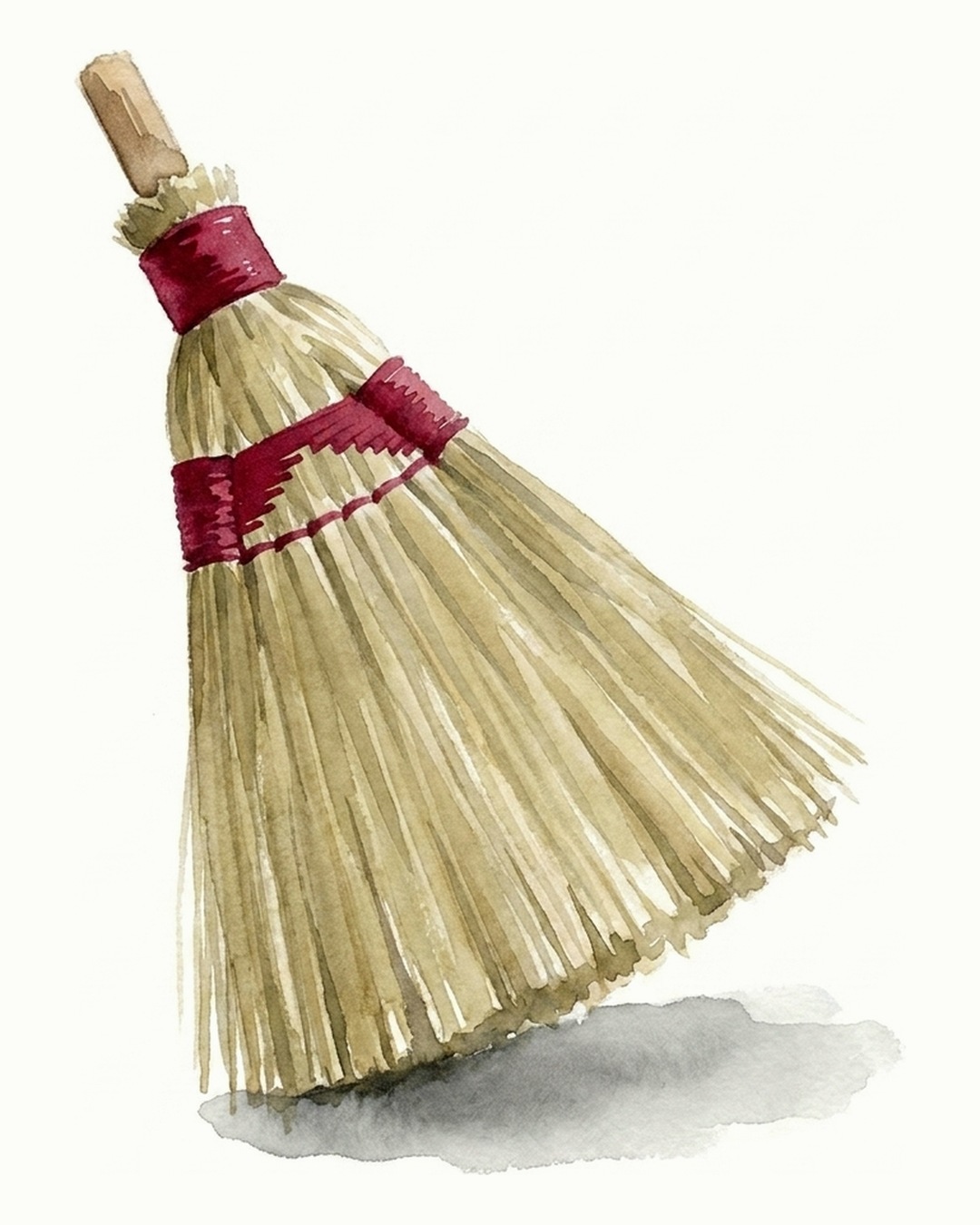
A zashiki (parlor) broom made in Nakatsu, Aikawa, Kanagawa since the late Edo period. Broomcorn grown in the village's own fields is bound by hand, house by house. The craft lapsed after the war and was revived in 2003, when the seed and the skill were returned to the soil.
Once, in the village of Nakatsu, broomcorn grew in every household's field.
Seeds were sown in early summer; at the height of the season the soft heads were cut, before the grain set. The seed was threshed off and the stalks dried in the sun, and when the farm work eased, each house wove them into brooms. The grass raised in the field became the tool that swept that house's floor.
Broom-making spread through Nakatsu, in Aikawa, Kanagawa, in the last years of the Edo period. Yanagawa Tsuneemon, born in 1822, is said to have carried home the making and the growing he had learned in his travels. The broom became winter work, and by the Taisho and early Showa years almost every farmhouse in the village took part. The material grew in the fields; the hands moved in the houses. The village itself was a single workshop.
After the war, cheap imported brooms and the vacuum cleaner thinned out the makers, and in the 1960s the Yanagawa Yuji shop, too, closed. When brooms were no longer made, the broomcorn fields vanished with them. What was nearly lost was not only the weave — it was the whole turning of the year: when to sow, when to cut, the winter hours of moving the hands.
In 2003, Yanagawa Naoko, the sixth generation, set the revival in motion. Working from the brooms that survived, she first went looking for the seed, and returned it to the field. Today the grown heads are chosen one by one and bound also with thread dyed in the plants close at hand — wild-grape bark, cherry leaves.
Behind one broom stands one stalk of grass. Behind that grass stand the sown field and the hands that know the season.
What the Nakatsu broom keeps is not the shape of the broom alone. It is the year of a village that raised its own material and turned it into the tools of daily life.
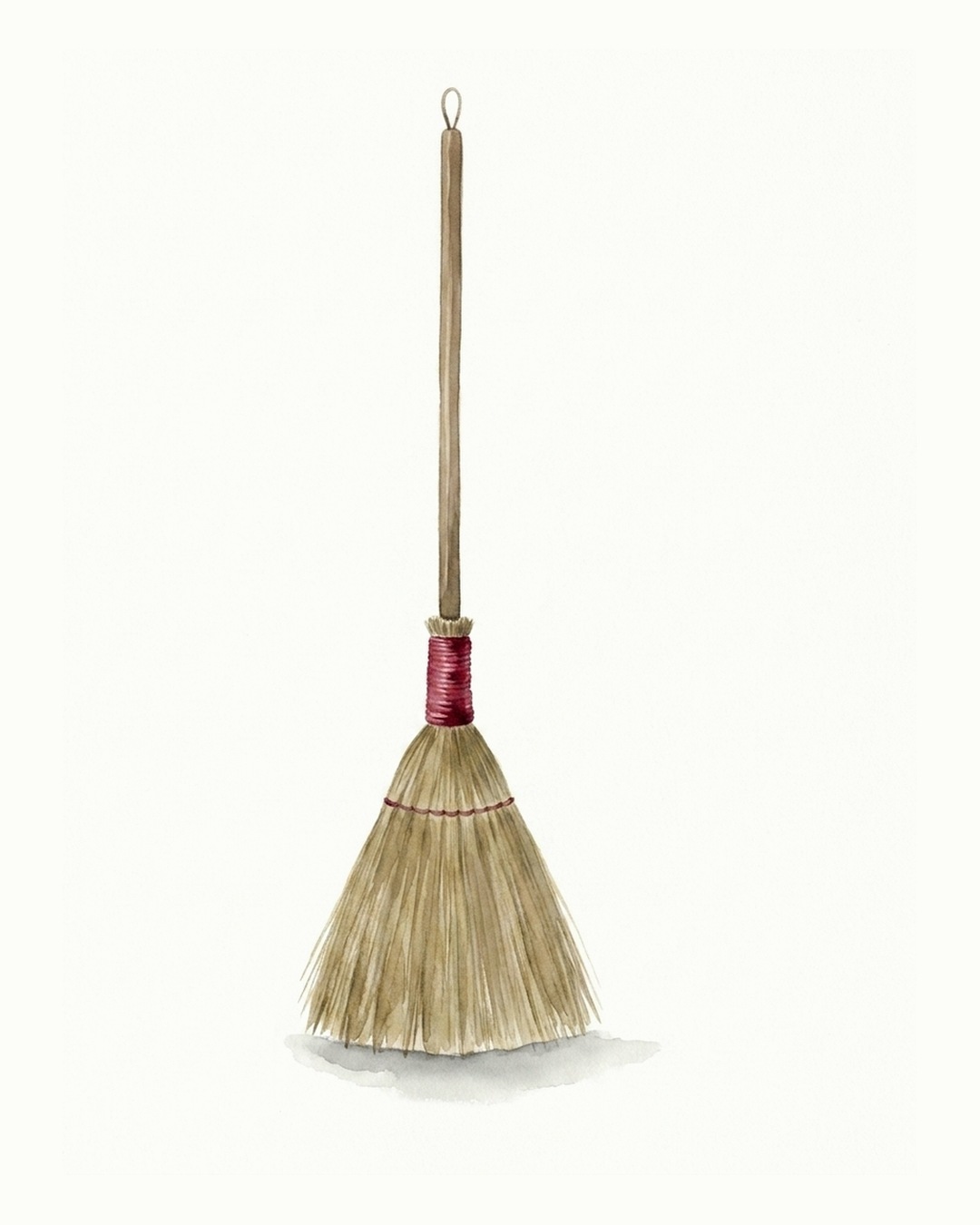
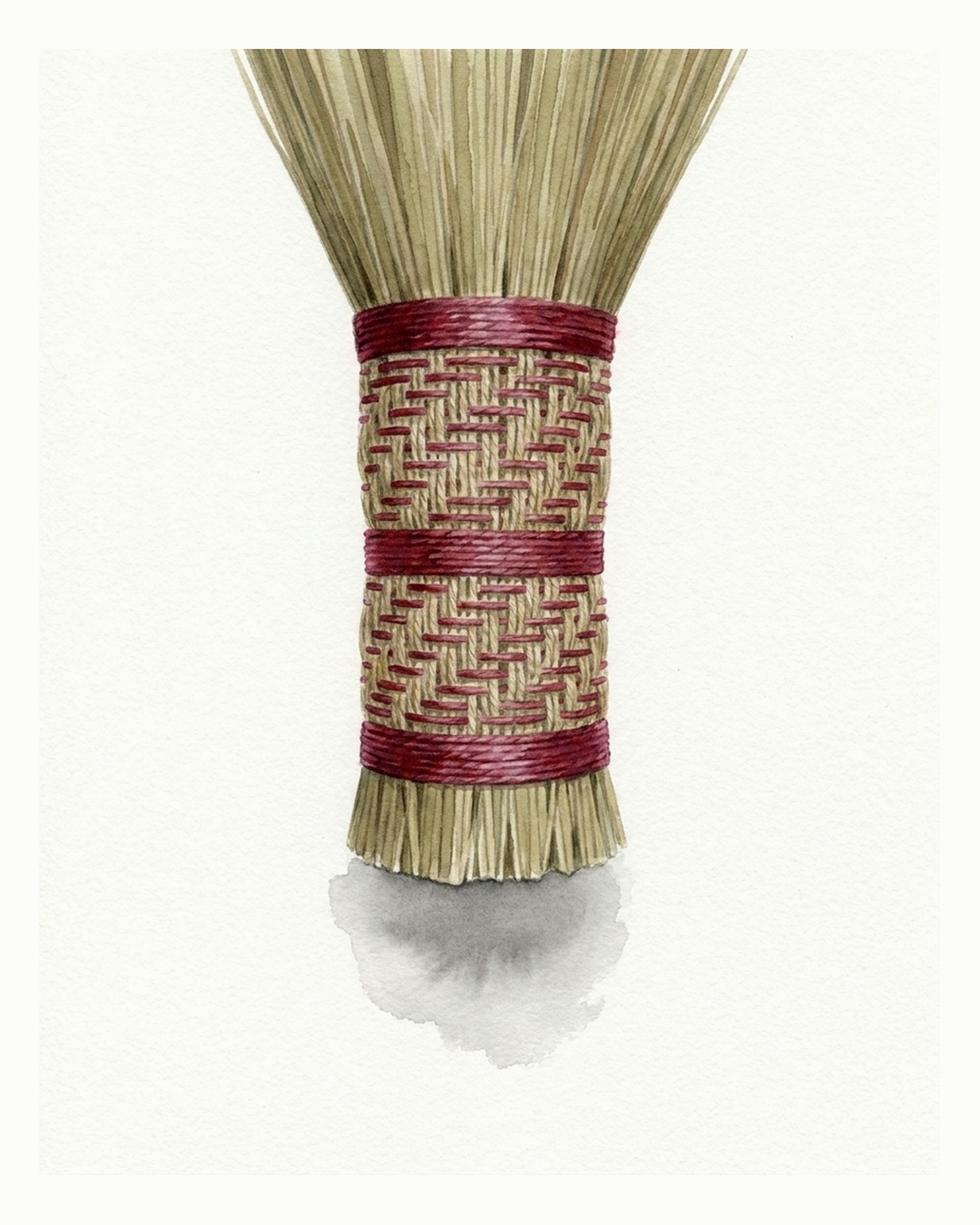
Shops and makers will be listed here as we verify them, one by one.
Details are based on official sources (checked: 1 Sep 2026) and may change — please check the official page before you go.