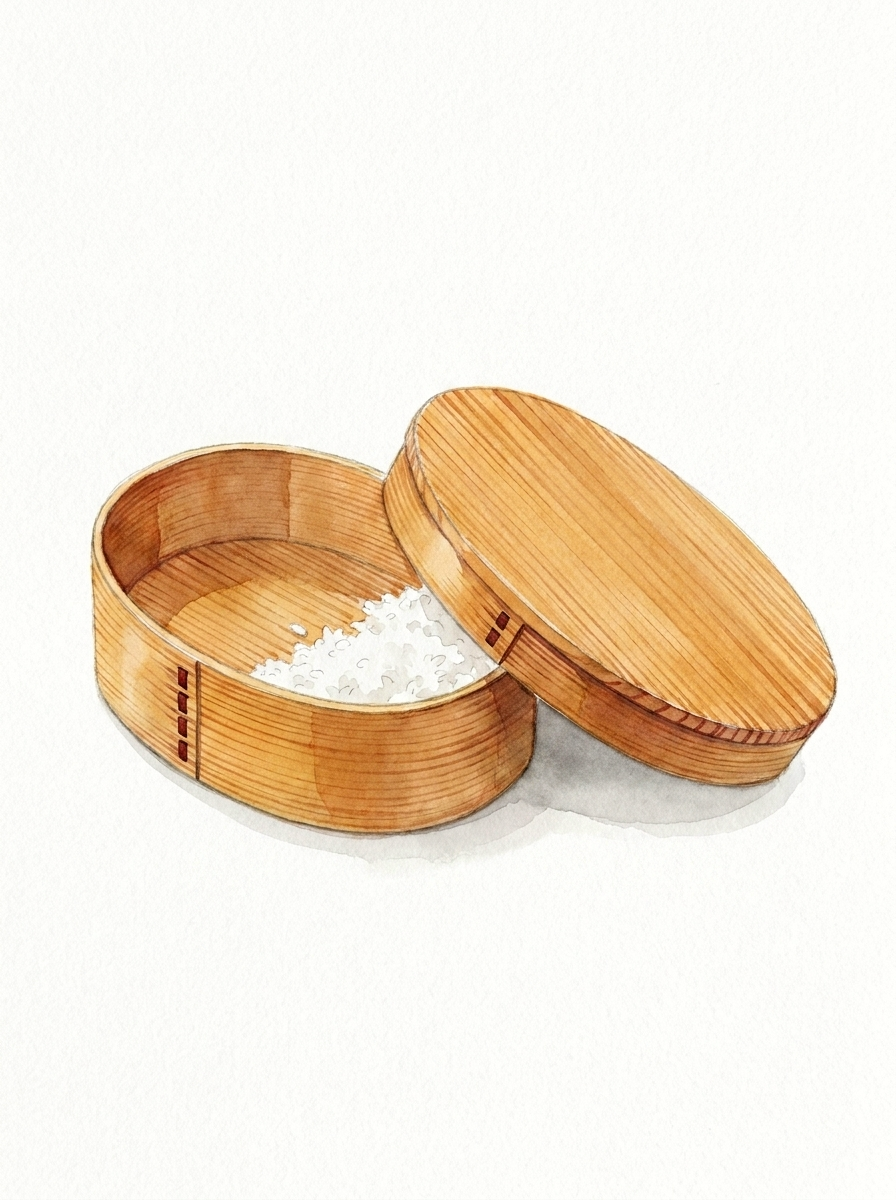
Bentwood from Odate, Akita: straight-grained natural Akita cedar shaved thin, simmered, hand-bent, and sewn with wild-cherry bark — no metal, no glue. A cedar ohitsu regulates moisture and keeps rice soft. A national traditional craft since 1980.
Rice, in a vessel that breathes.
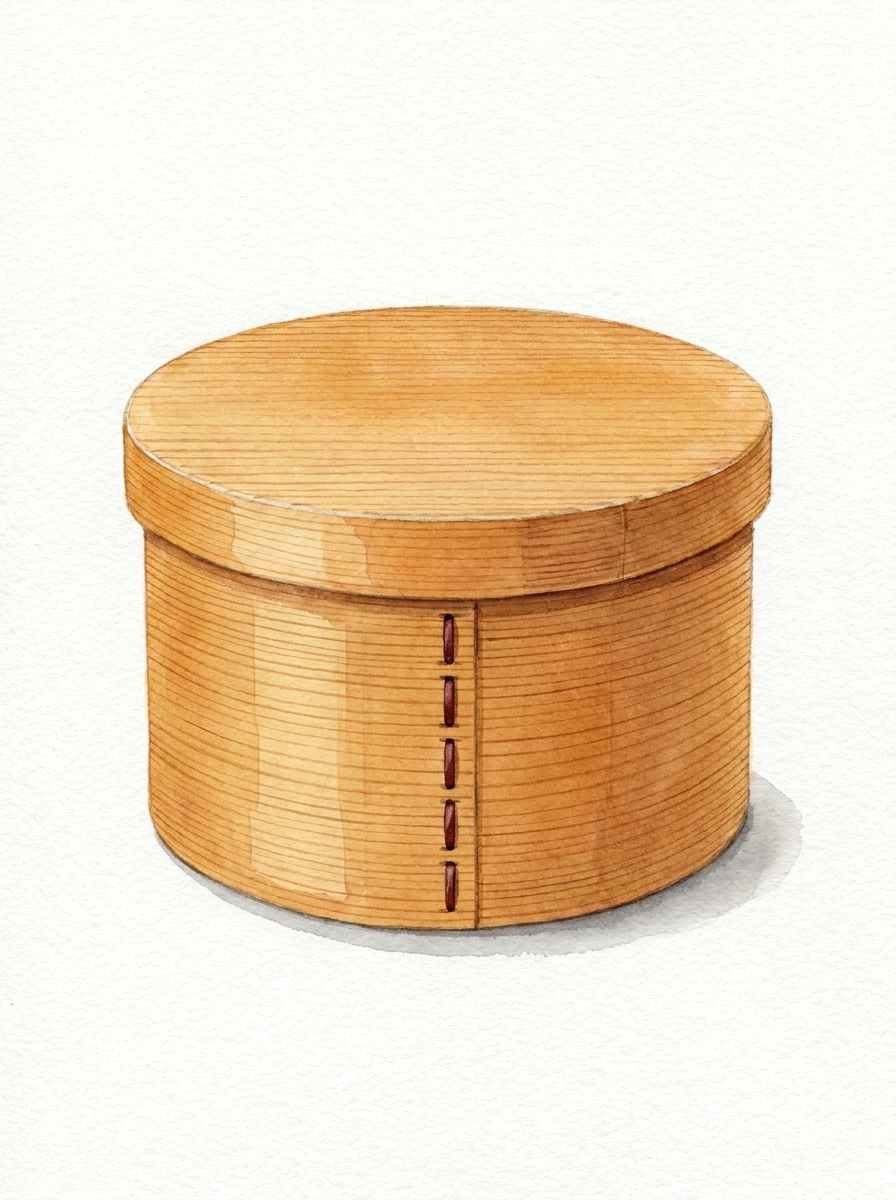
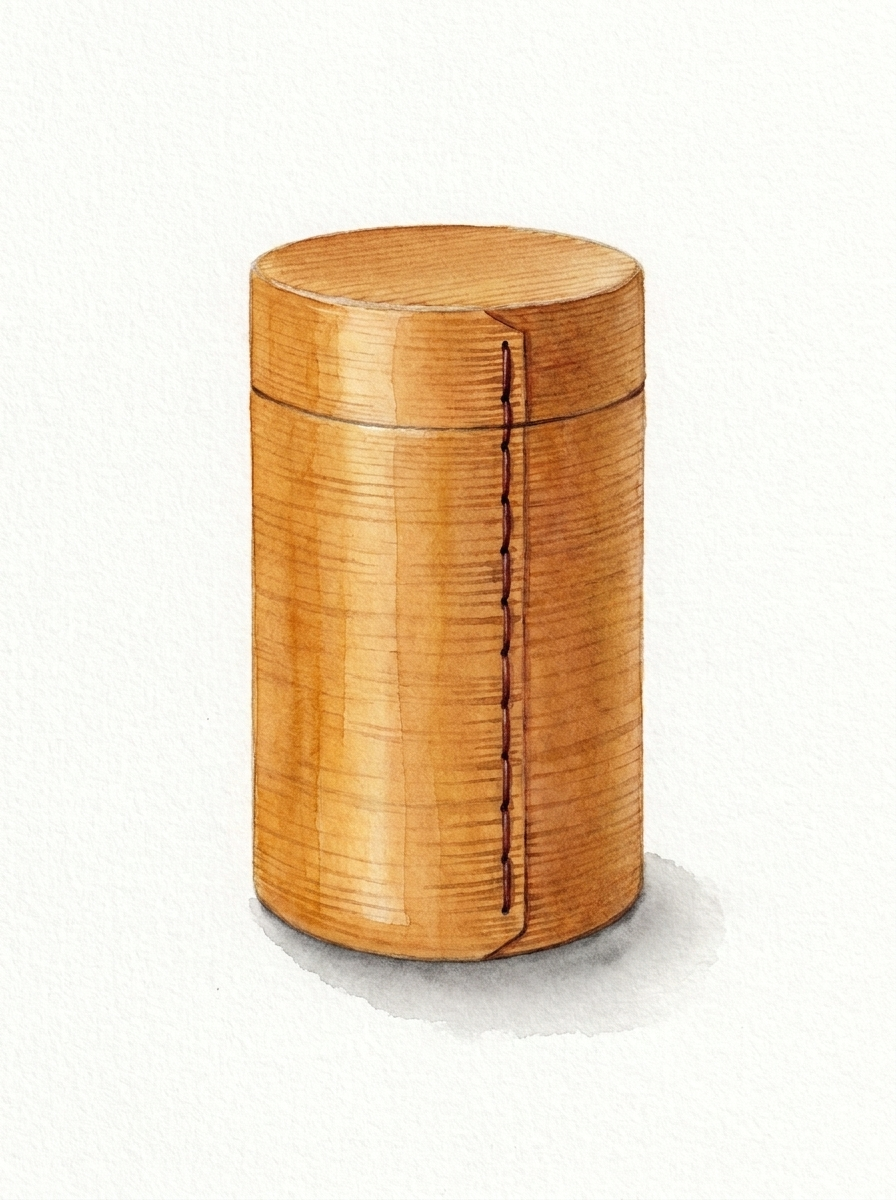
In Odate, in the north of Akita, there is a craft of bentwood — magewappa. Straight-grained slivers of natural Akita cedar are shaved thin, simmered in hot water, and bent by hand into a circle; the seam is sewn, one stitch at a time, with strips of wild-cherry bark (‘kaba’). No metal, no glue — only wood to wood and wood to bark — a vessel light and springy.
Its beginnings are old. In 1602, to relieve the hardship of the castle town, the lord of Odate, the Satake Nishi house, is said to have encouraged low-ranking samurai to make magewappa as a side trade. Bentwood vessels have even been found in Heian-period sites; as a tool of daily life it reaches back further still.
The beauty of magewappa reveals itself in use. Rice moved into a wooden ohitsu stays soft for hours, the cedar drawing off excess moisture and holding a gentle damp. Open a lunch box and the cedar's scent rises with the rice. The maker's name is not left on the vessel — only the straight lines of the grain, and the honest run of the cherry-bark stitches, remain.
In 1980 it was designated a national traditional craft. Nameless hands keep bending wood, for the tables of nameless people.
Shops and makers will be listed here as we verify them, one by one.
Details are based on official sources (checked: 15 Aug 2026) and may change — please check the official page before you go.