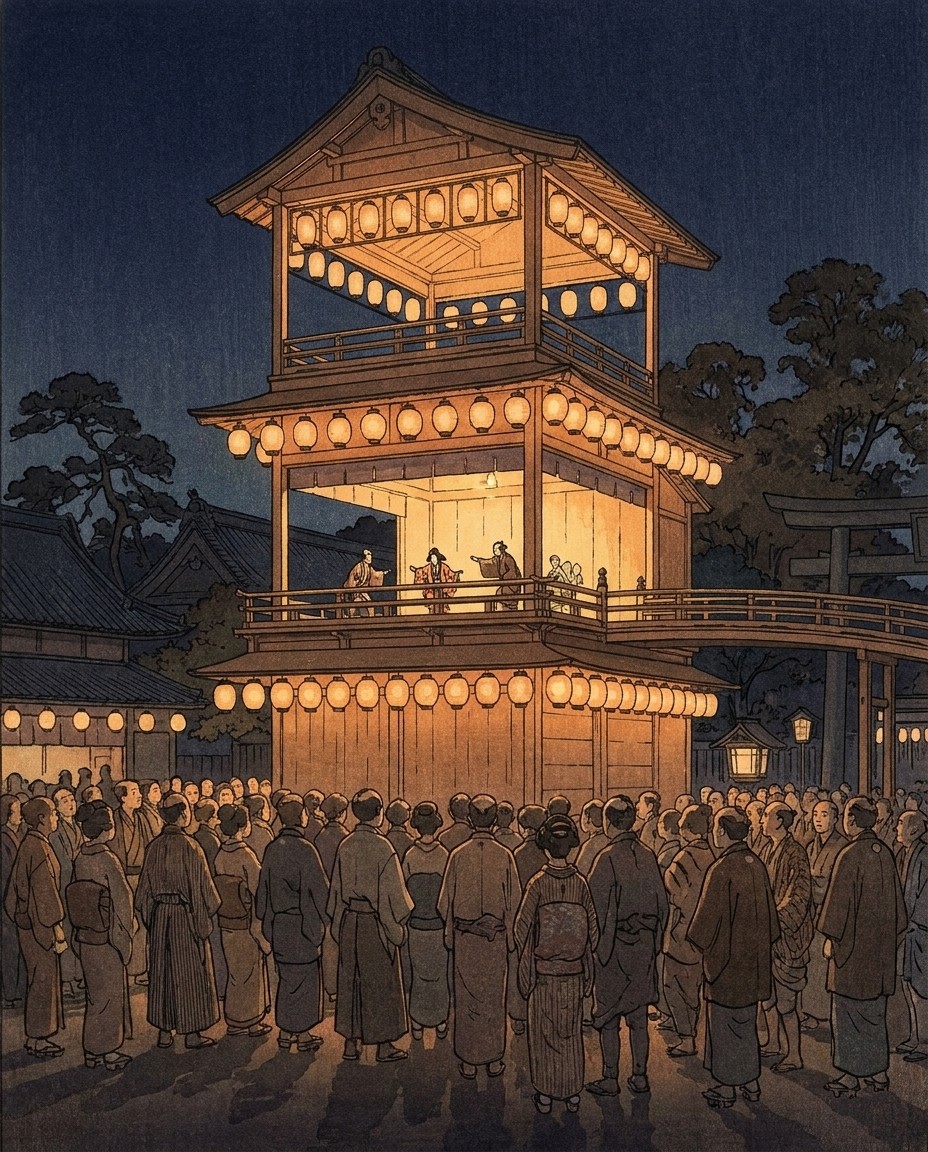
Lantern puppet theatre held each September at Fukushima Hachiman Shrine since 1744. A nail-free three-tier stage; karakuri brought home from Osaka in 1771. National Important Intangible Folk Cultural Property (1977).
Each September, around the autumn equinox, the townspeople of Yame-Fukushima in Fukuoka raise a wooden stage inside the precinct of Fukushima Hachiman Shrine: eight metres high, fourteen metres wide, two storeys and three tiers - and not a single nail or clamp holds it together. When the lanterns are lit, puppets begin to dance on the middle tier; musicians play on the tier above, puppeteers work the strings below. The puppets walk across a bridge on the stage by themselves - a karakuri feat said to exist nowhere else in Japan.
It began in 1744 as an offering of puppet lanterns at the shrine's hojo-e rite. The turning point came in 1771, when Matsunobe Jinzaemon - who had been the chief joruri playwright at the Toyotake-za theatre in Osaka - returned to his home town and taught the karakuri mechanics he had mastered there. The lantern tradition, brought earlier from Yamaga, met Osaka's puppet machinery in this small town. In 1977 it was designated a National Important Intangible Folk Cultural Property. For 280 years, the town has raised the stage and lit it again.
Shops and makers will be listed here as we verify them, one by one.
Details are based on official sources (checked: 17 Jul 2026) and may change — please check the official page before you go.