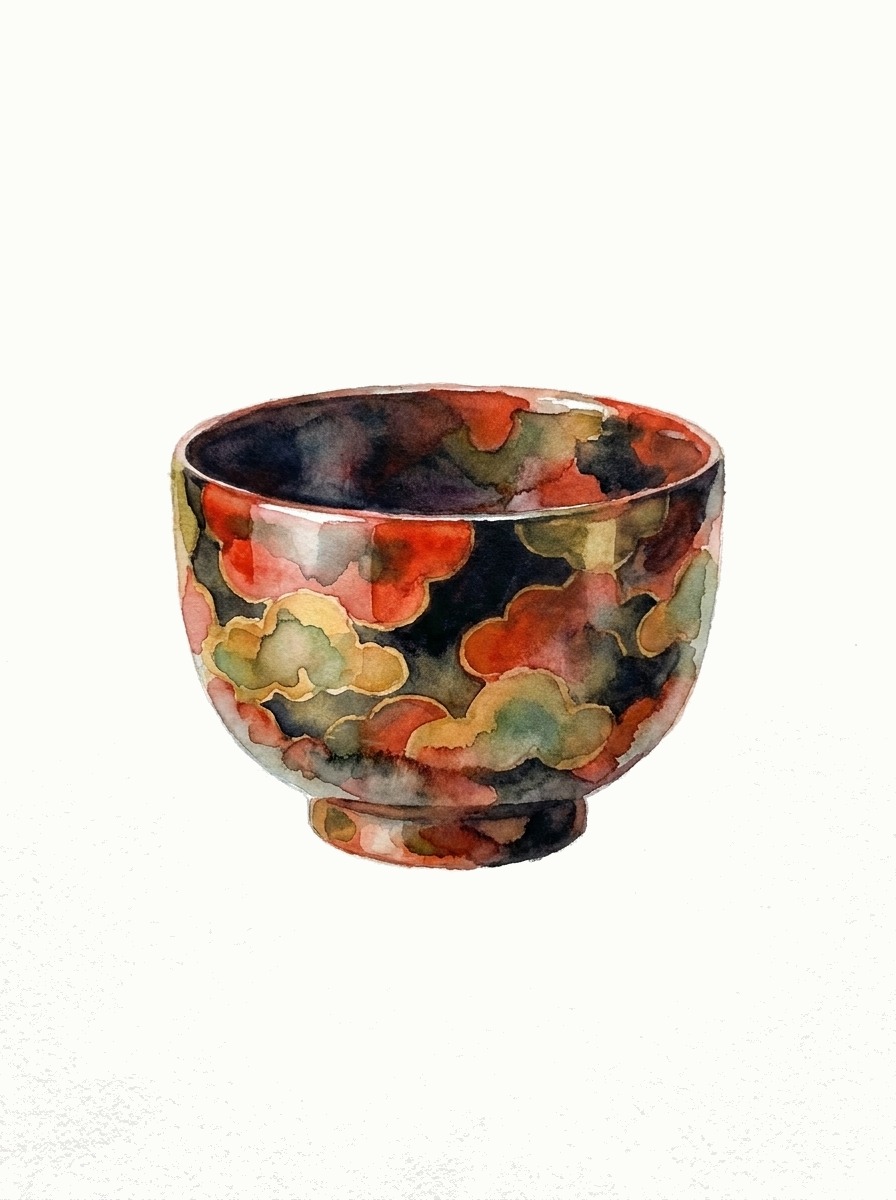
A lacquerware of Hirosaki. Its 'karanuri' pattern emerges only when dozens of built-up coats of coloured urushi are ground back — so painstaking it earned the name 'the fool's lacquer of Tsugaru.'
Layered forty-odd times.
Tsugaru-nuri was born in Hirosaki, at the northern end of Honshu. It arose in the mid-Edo period under Tsugaru Nobumasa, the fourth lord of the domain; the lacquerer Ikeda Genbei, invited from Wakasa, is remembered as its founder. By 1758 a record, the Tsugaru Kenbunki, already noted "a first-rate lacquerware of Hirosaki, called karanuri."
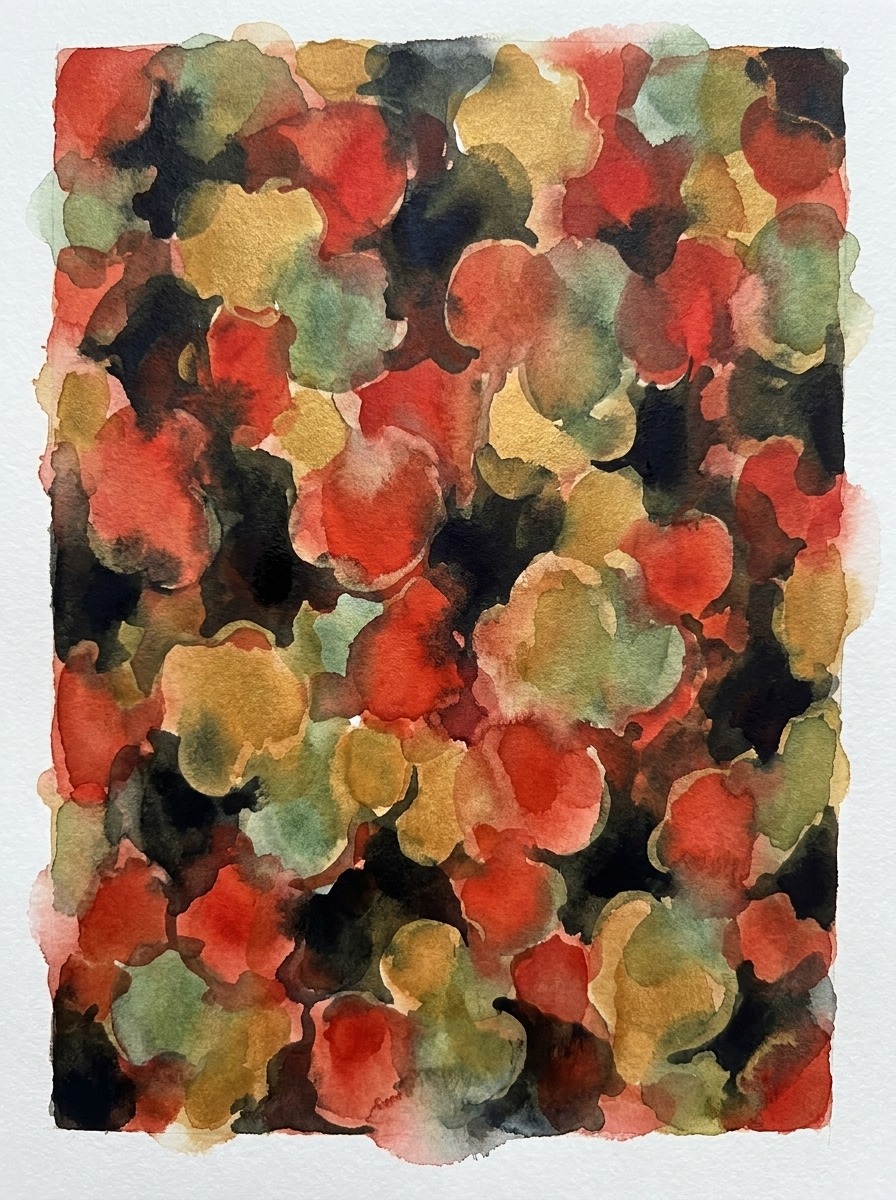
Karanuri is the signature technique. A notched spatula lays down ridges of lacquer; over them, coloured urushi — red, black, yellow, green — is built up coat upon coat, forty-odd times over some two months. When the surface is finally ground back on a whetstone, the buried layers are sliced open and a mottled, cloud-and-scale pattern appears for the first time. It is not painted: it is the accidental figure that only relentless layering and grinding can produce. So painstaking is the work that locals call it, half in affection and half in disbelief, "the fool's lacquer of Tsugaru."
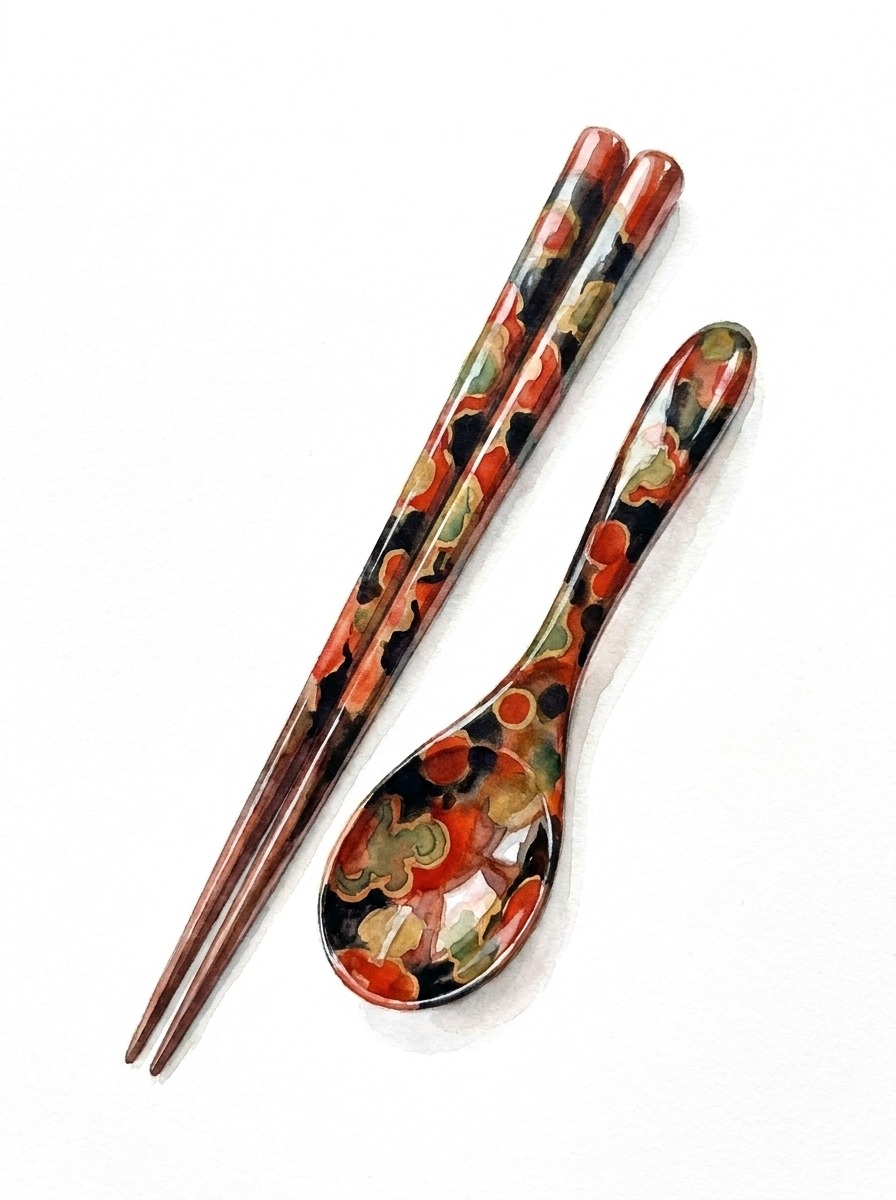
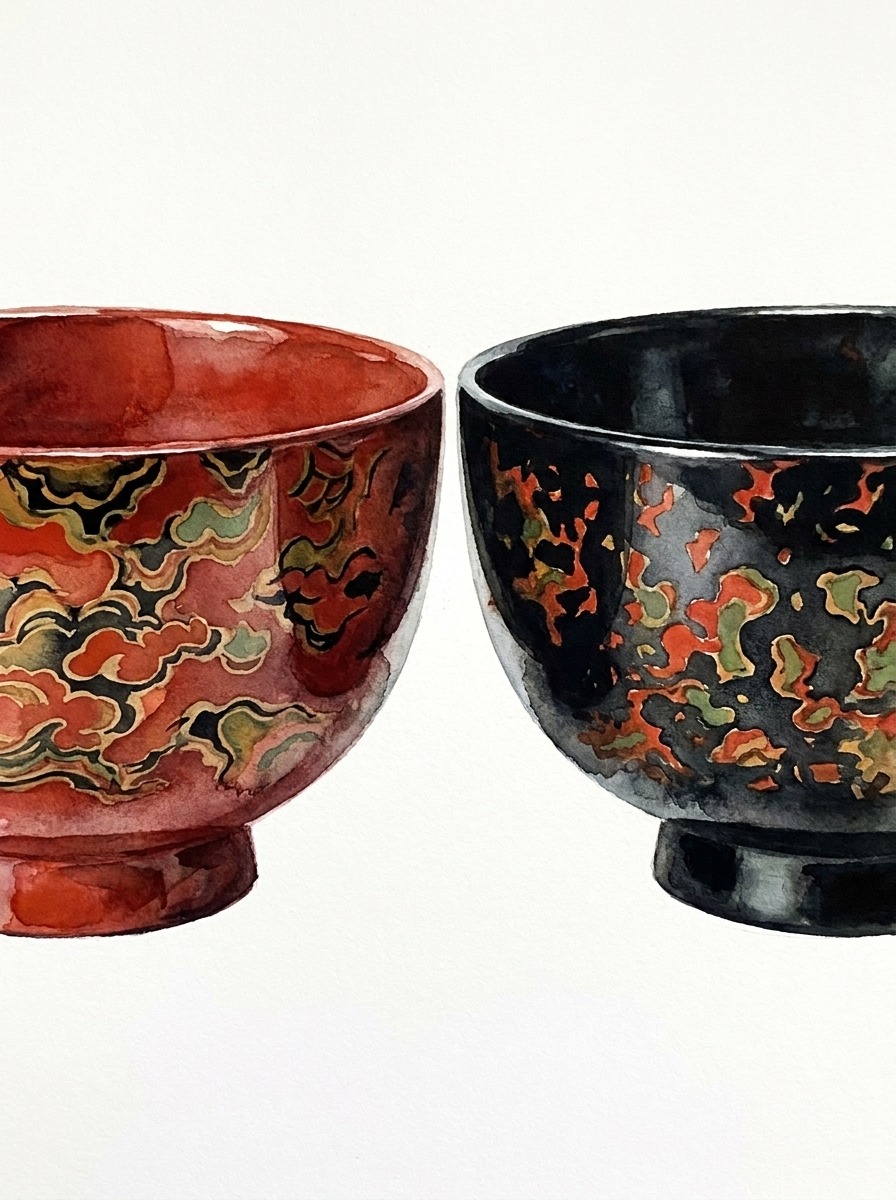
Alongside karanuri are three more techniques: nanako (rings raised with sown rapeseed), monsha (a sober matte black from rice-husk charcoal), and nishiki (arabesques drawn in black over red and yellow). The materials are natural urushi and local hiba cypress, magnolia, katsura and zelkova. What is made — chopsticks, bowls, trays, tiered boxes — are the everyday vessels of a deep-snow country.
Designated a National Traditional Craft in 1975 (the northernmost lacquerware on Honshu) and an Important Intangible Cultural Property in 2017. Beneath a pattern that appears only when ground away lie forty-odd coats of invisible, layered time.
Shops and makers will be listed here as we verify them, one by one.
Details are based on official sources (checked: 2 Aug 2026) and may change — please check the official page before you go.
Ikeda Genbei sent to Edo to study lacquer — remembered as the founder
A record notes 'a first-rate lacquer of Hirosaki, called karanuri'
Grows into an industry in early Meiji
Designated a National Traditional Craft
Designated an Important Intangible Cultural Property