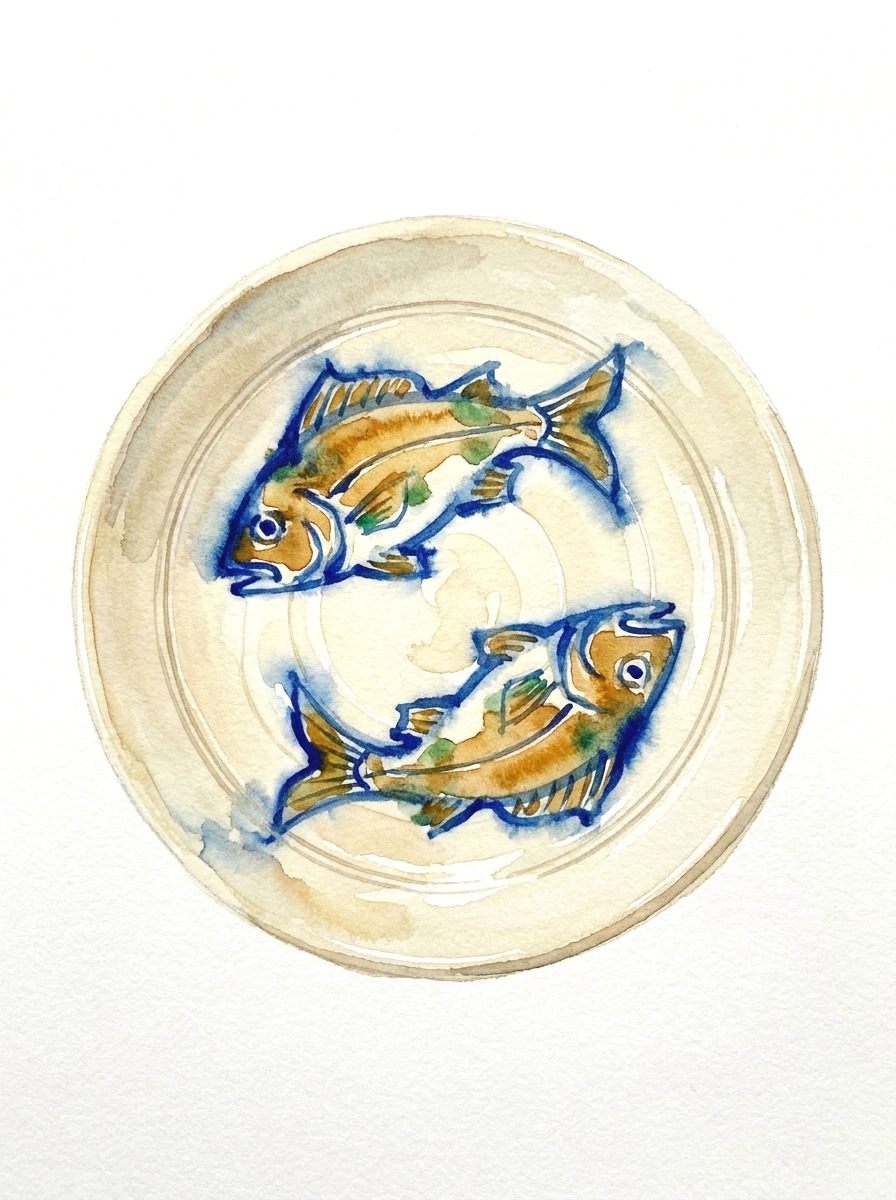
The pottery of Tsuboya in Naha, Okinawa. Born in 1682 when three kilns were merged; split into unglazed arayachi and painted jouyachi. Its emblem is the fish motif — championed by the mingei movement, designated a National Traditional Craft in 1976.
A fish swims across the plate.
Tsuboya-yaki is the pottery of Naha in Okinawa — yachimun, in the language of the islands. It began in 1682, when the Ryukyu court gathered scattered kilns (Chibana in Misato, Takaraguchi in Shuri, Wakuta in Naha) into a single place: Tsuboya.
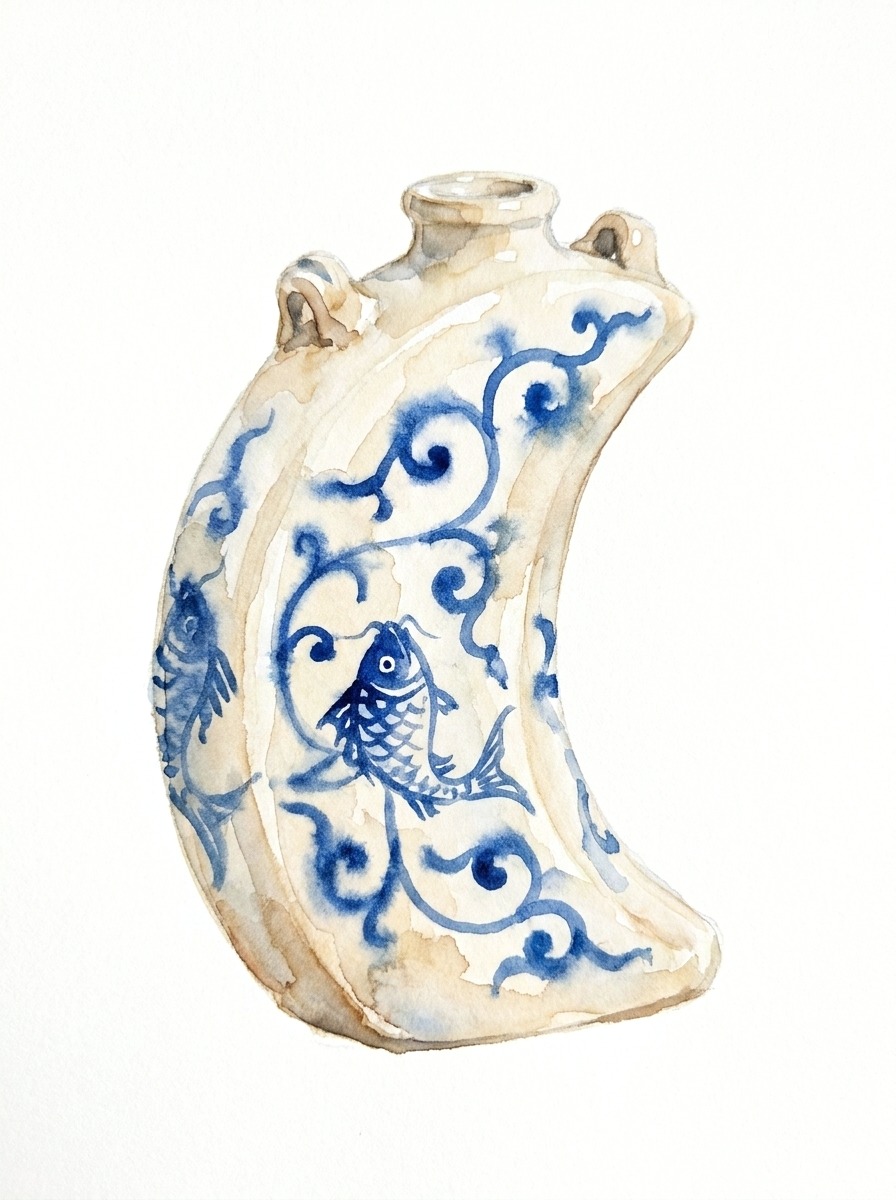
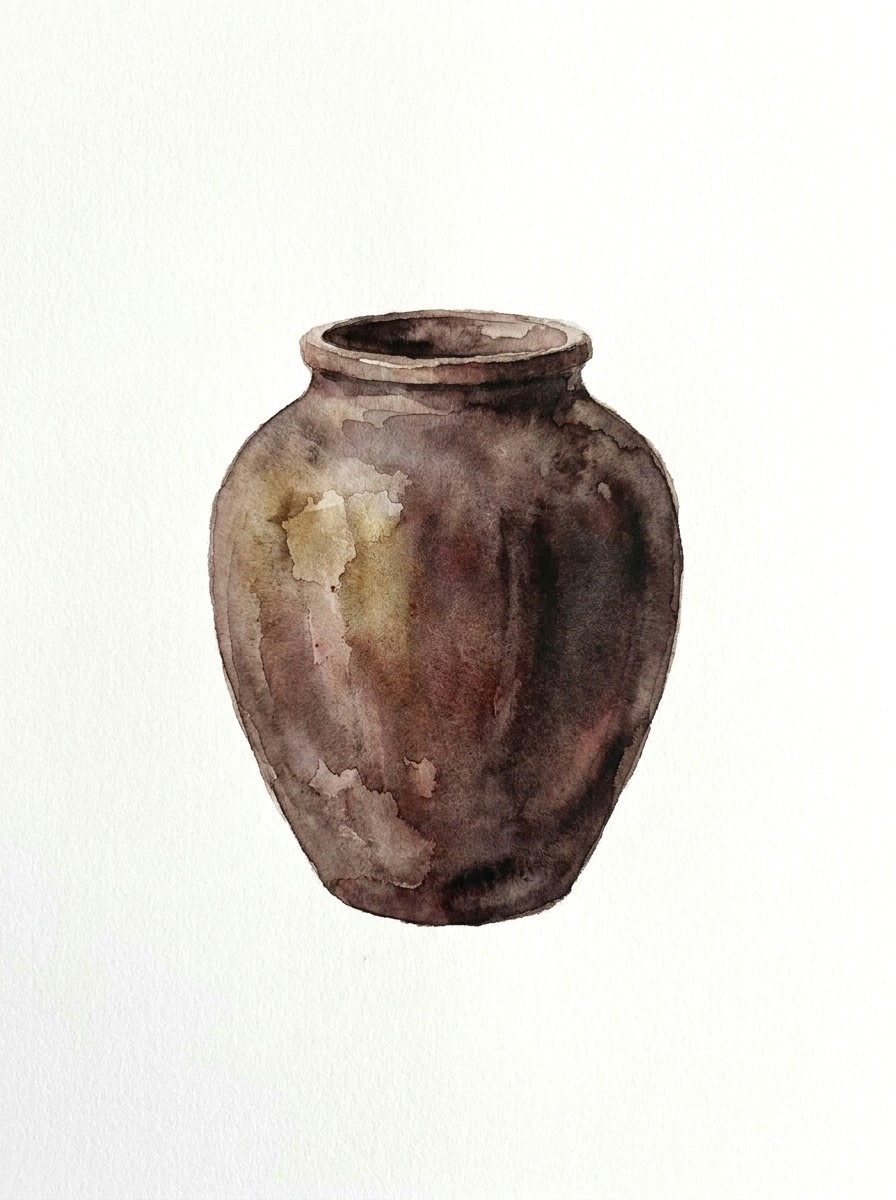
The ware divides into two. One is arayachi, in the line of nanban stoneware — unglazed and fired hard into large water jars, awamori jars and oil pots. The other is jouyachi: coated in white slip, glazed and painted, the bowls, plates and dishes of the table.
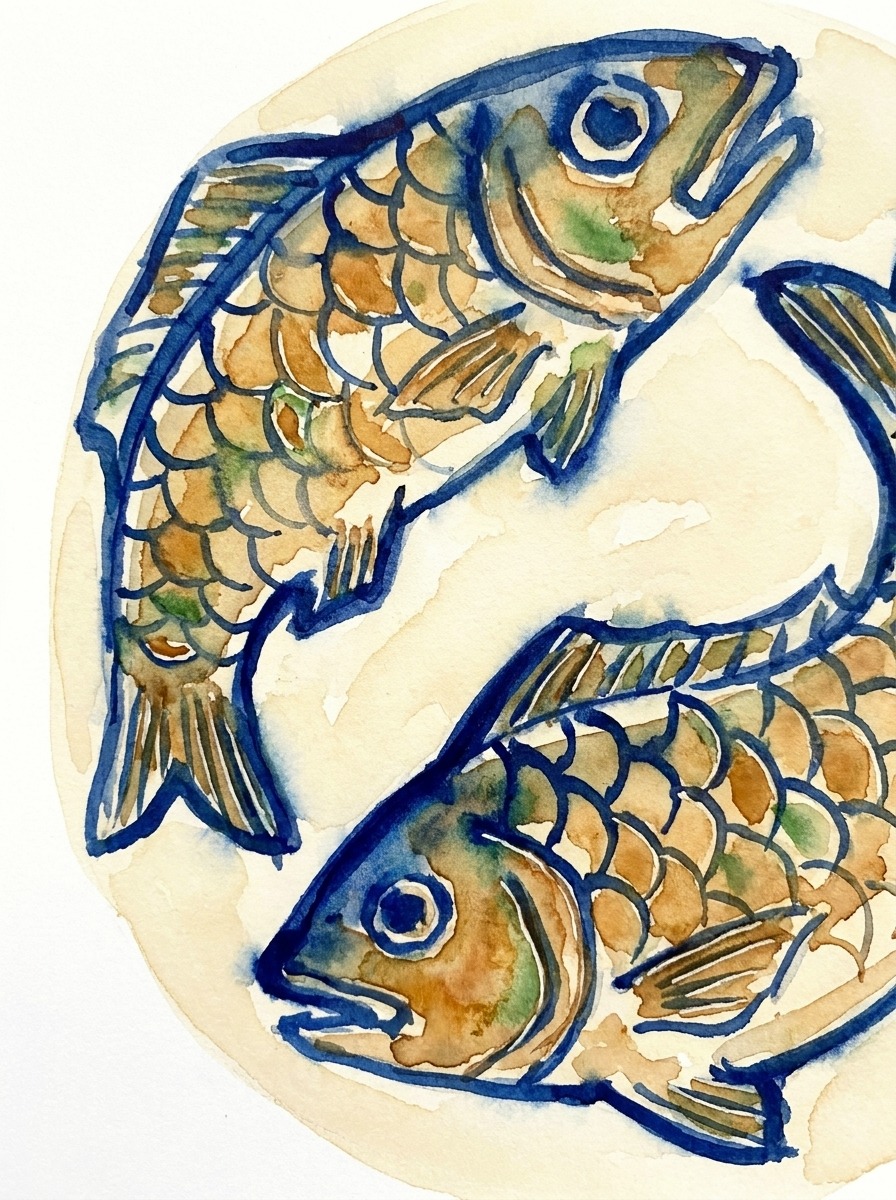
The painted ware is worked with line-carving, sgraffito, inlay, red overglaze and trailed slip (icchin). Above all it carries the fish motif — gyomon — the emblem of Tsuboya: cobalt blue, amber and green, a few fish drifting in a slow ring across a plate. The crescent-moon dachibin, a flask for carrying awamori, is another form found only here.
Before the war, cheap mainland pottery nearly finished Tsuboya; it was the mingei movement — Hamada Shoji, Kawai Kanjiro, Yanagi Soetsu — that carried it to the wider country and saved it. After the war, smoke from the climbing kilns forced many potters to move to Yomitan and open the 'village of yachimun,' while Tsuboya's pottery street keeps its old kilns still. Designated a National Traditional Craft in 1976.
Earth, fire, and the life of the islands. In the plate, the fish is still swimming.
Shops and makers will be listed here as we verify them, one by one.
Details are based on official sources (checked: 12 Aug 2026) and may change — please check the official page before you go.
The court merges the Chibana, Takaraguchi and Wakuta kilns into Tsuboya
Nearly lost to cheap mainland ware; the mingei movement carries it nationwide
Kiln-smoke rules push potters to Yomitan, founding the 'village of yachimun'
Designated a National Traditional Craft
Kept alive on Tsuboya's pottery street and at Yomitan