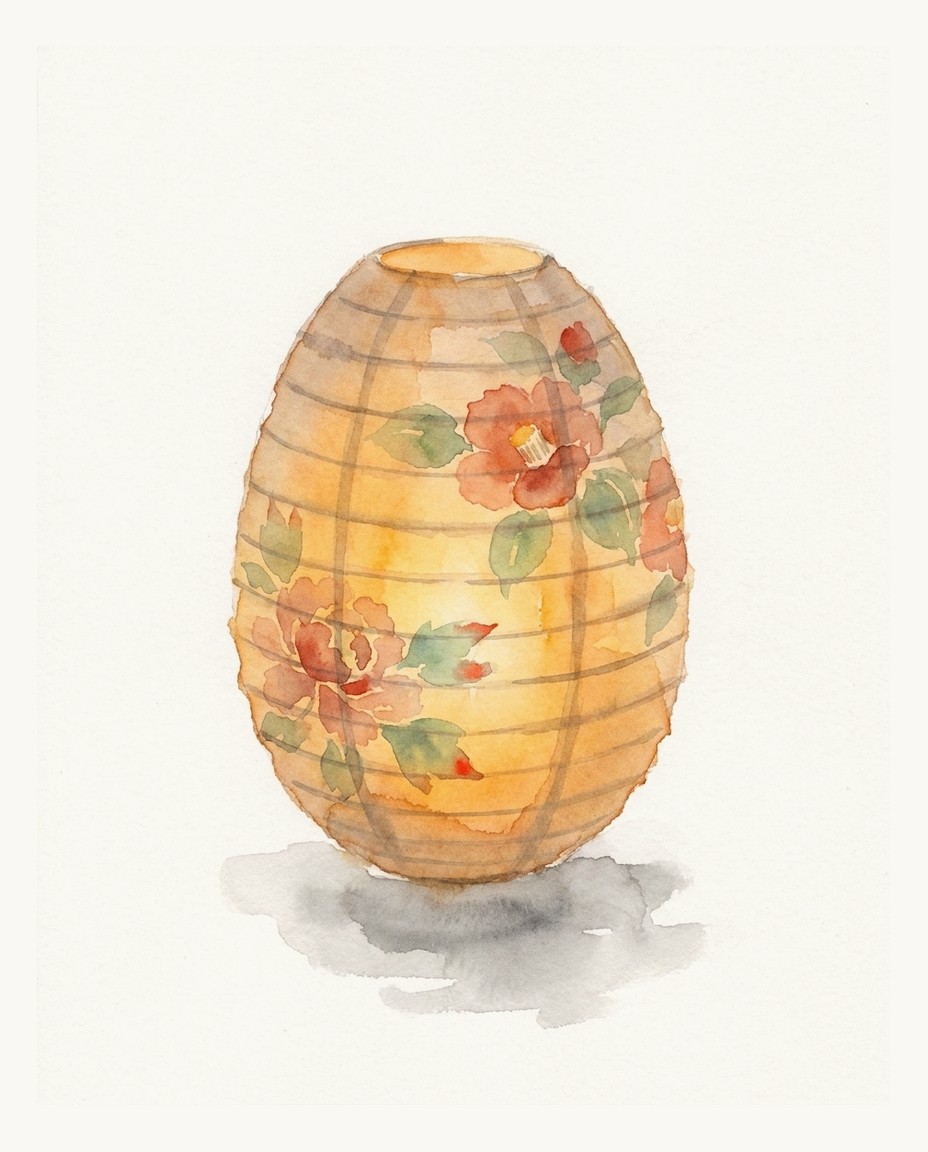
Bon lanterns from Yame, Fukuoka. A single continuous bamboo rib wound in a spiral, skinned with paper thin enough to glow, painted with flowers and birds. A designated traditional craft (2001); Japan's largest producer of Bon lanterns.
Yame chochin began about two hundred years ago, late in the Edo period. In Fukushima town - today's Yame, Fukuoka - a maker named Aramaki Bunemon painted camellias and peonies, in a single colour, on plain lanterns hung at graves. They were called ba-chochin.
What changed them was a craftsman named Yoshinaga Tahei, working around the Ansei years (1854-59). He rebuilt the frame as a single spiral: instead of stacking separate bamboo hoops, he wound one long, unbroken bamboo rib upward in a continuous spiral - a frame with no joins. Then he skinned it with the thinnest of Yame handmade paper. The light came through. Hung under the eaves or upstairs, they looked cool in the summer heat, and people called them suzumi-chochin - cooling lanterns. They became popular across Kyushu.
The glow seeps through the thin paper and the painted flowers rise out of it. In 2001 Yame chochin was designated a traditional craft by the Minister of Economy, Trade and Industry. Yame still makes more Bon lanterns than anywhere in Japan.
Shops and makers will be listed here as we verify them, one by one.
Details are based on official sources (checked: 13 Jul 2026) and may change — please check the official page before you go.