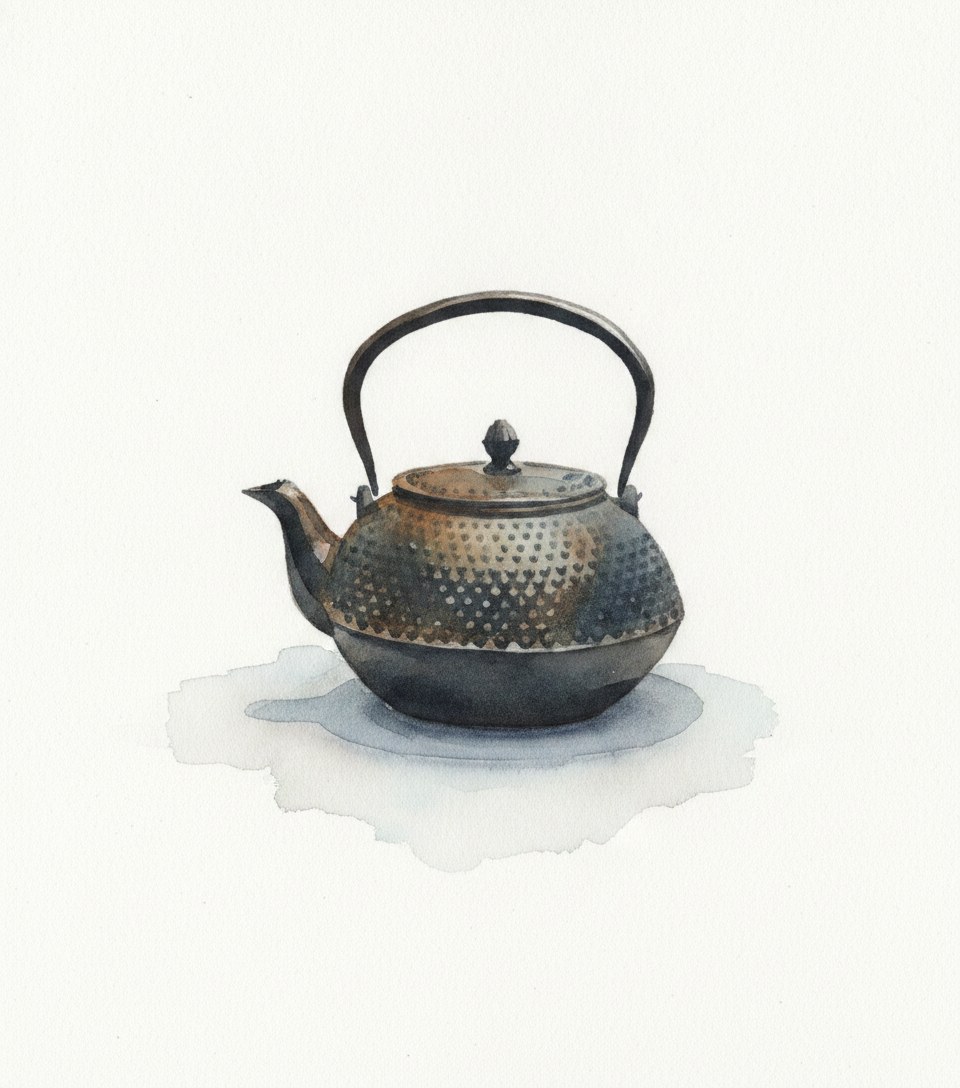
Cast ironware from Iwate — kettles, teapots and wind chimes. Japan's first designated Traditional Craft (1975); nearly lost, now prized worldwide.
In Iwate, water is still boiled in iron. Nambu ironware grew from two towns: Morioka, where the lords summoned Kyoto kettle-makers in the 1600s to cast vessels for the tea ceremony, and Mizusawa, older by far, where casters had made temple fittings and cooking pots since the twelfth century.
The pebbled arare pattern on a kettle's belly is punched into the mould one dimple at a time. After casting, the iron is fired in a kiln until it grows a skin that will not rust or taint the water. In 1975 it became the first craft Japan formally protected — it nearly disappeared with the modern kitchen, and instead crossed the sea.
Shops and makers will be listed here as we verify them, one by one.
Details are based on official sources (checked: 7 Jul 2026) and may change — please check the official page before you go.
Hundreds of raised dots, each punched into the mould by hand — beautiful, and giving the iron more surface to breathe.
Mizusawa casters make temple fittings under the Northern Fujiwara.
Morioka lords summon Kyoto kettle-makers for the tea ceremony.
Japan's first designated Traditional Craft.