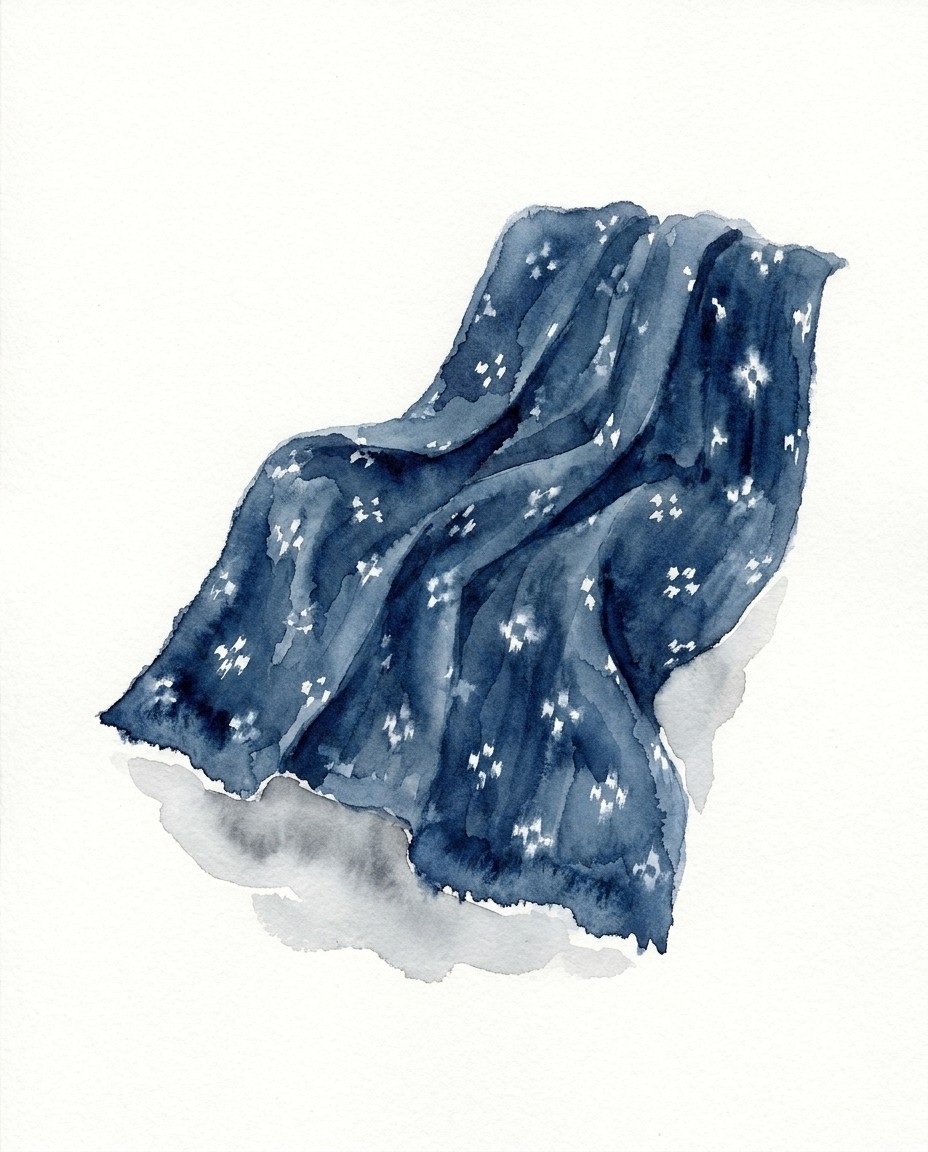
Kurume-gasuri - hand-tied, Awa-indigo cotton ikat from the Chikugo plain in Fukuoka; a National Important Intangible Cultural Property and one of Japan's three great kasuri.
Kurume-gasuri is a cotton ikat woven for two centuries on the Chikugo plain in Fukuoka. It began around 1800 with a Kurume girl named Inoue Den (1788-1869). Puzzled by the white flecks in a faded old cloth, she unpicked it and worked out the secret: bind sections of thread before dyeing, and the bound spots resist the indigo and stay white. Woven, those white spots scatter across the cloth like frost - this is kasuri. Threads are hand-tied, dyed in Awa natural indigo, and woven on a hand-loom with a throwing shuttle. In 1957 the hand-technique was designated a National Important Intangible Cultural Property; Kurume-gasuri stands with Iyo and Bingo as one of Japan's three great kasuri. The faint blur where each motif's edge slips is the quiet beauty of the cloth.
Shops and makers will be listed here as we verify them, one by one.
Details are based on official sources (checked: 11 Jul 2026) and may change — please check the official page before you go.